


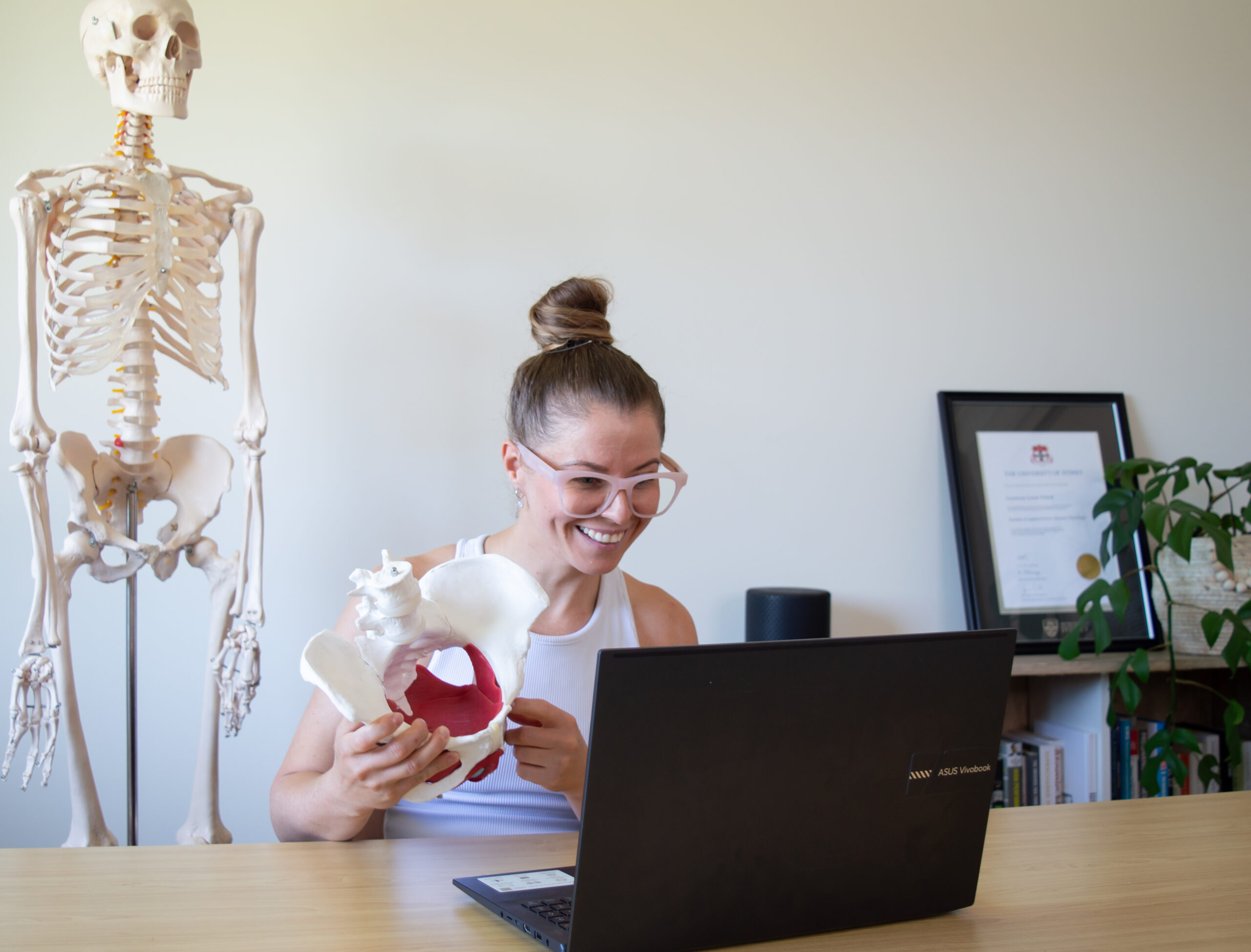
04 Sep Powering women’s health through virtual care
Exercise isn’t just about fitness; it can be a tool that helps regulate hormones, reduce inflammation, improve circulation, alleviate pain and enhance muscle function. For many women, the right movement strategies can mean the difference between struggling through daily life and thriving. Prescriptive exercise can transform the lives of women dealing with conditions like endometriosis, polycystic ovarian syndrome (PCOS), chronic pelvic pain, infertility, prolapse, and pelvic floor dysfunction. Access to specialised care can be limited for women living in rural and regional areas. However, access through online platforms like telehealth have opened additional channels to access exercise physiology and rehabilitation.
Courtenay Polock from HER Exercise Physiology says that a virtual service can be a game changer for women in remote areas. It’s not just about offering telehealth as a backup option — it helps prioritise accessible, consistent, and comfortable expert-led care for women everywhere. Unlike traditional clinics, which can be limited by location and availability, virtual services can provide ongoing support in a way that in-person care might not suit.
Comparisons of virtual exercise treatment
The online delivery of exercise treatment may not be the best practice for every client. Some may still require hands-on interventions for specific support needs and learning styles. Despite this, research shows that benefits can be found in online sessions.
A systematic review found that pelvic floor muscle training delivered via telerehabilitation can still be feasible and effective. The study highlighted significant improvements in urinary incontinence severity, pelvic floor muscle strength, and quality of life among participants following virtual appointments.
Similarly, another study demonstrated that telehealth-based pelvic health physical therapy can be an effective alternative to in-person visits for patients with pelvic floor disorders. The research indicated that telehealth interventions led to comparable patient adherence to in-person appointments and symptom improvement outcomes.
Education, exercise progression, and behaviour modification can be the most powerful tools in recovery. Virtual platforms can still assist with real-time adjustments, ongoing guidance, and levels of support that parallel in-person sessions. Through virtual sessions, women in rural areas have another avenue to take charge of their health and seek long-term results.
Additional benefits of virtual healthcare for women’s health
- Access to specialised care miles away – With specific conditions, clinicians who specialise and have experience providing the required treatments can be difficult to find close by. Virtual care can limit barriers to receiving the care they need, no matter where they live.
- Consistency of care – The ability to skip the waiting room and not stress about travel time to your appointment location may assist in maintaining appointment times. For women managing chronic health conditions, saving energy can be as important as exercise itself.
- Tailored exercise in a safe space – Feeling safe is key to movement retraining. Virtual care allows women to exercise in an environment where they feel comfortable. It also can help with tailoring exercises to fit individual living spaces.
Case study: Alice’s journey with endometriosis, living in a rural area
Alice*, a 31-year-old woman with endometriosis, had been struggling with persistent pelvic pain, pain during exercise, and life-impacting pelvic floor symptoms. For two years, she had been seeing a physiotherapist for manual internal release, but her progress had plateaued. Living in a regional area, she had no local practitioners with expertise in endometriosis and pelvic floor dysfunction who could guide her toward exercise interventions.
Alice’s main goal wasn’t only to reduce pain — she wanted to exercise consistently for her health and fitness without fear of flare-ups. Through her telehealth appointments, she began rebuilding confidence in her body through guided movement therapy, pelvic floor retraining, and progressive exercise programming.
In 4 months, she progressed to strength training in the gym and learnt how to modify her program based on her menstrual cycle and typical pain patterns. Now, she experiences significantly less pelvic pain, very minimal pelvic floor symptoms, and an overall improvement in her quality of life. Most importantly, she no longer feels like endometriosis is controlling her — she is in control of it.
Looking ahead
The shift to virtual women’s health services isn’t just a passing trend — it’s the future of accessible, expert-led care. Exercise is one of the most powerful tools for managing women’s health conditions, and telehealth can ensure that more women can benefit from it.
Access to specialist care can be dictated by location, however, virtual care can break down these barriers, proving that expert support, education, and movement-based rehabilitation can be just as effective when delivered online.
Written by Courtenay Polock
Women’s Health AEP, AES and Founder of HER Exercise Physiology
HER Exercise Physiology is a fully virtual clinic dedicated to providing expert-led care for women’s health concerns. Unlike many services where telehealth is an afterthought, our clinic has been purpose-built for virtual care, designed from the ground up to deliver the same (if not better) outcomes than in-person care. Through evidence-based exercise interventions, tailored programs, and ongoing support, HER Exercise Physiology empowers women to take control of their health, no matter where they live.
References
Hao, J., Yao, Z., Remis, A., Huang, B., Li, Y., & Yu, X. (2024). Pelvic floor muscle training in telerehabilitation: A systematic review and meta-analysis. Archives of Gynecology and Obstetrics, 309(6), 1753–1764. https://doi.org/10.1007/s00404-024-07380-x
Karhu, M., Forsell, M., & Lehto, U. (2024). Telehealth is effective for pelvic health physical therapy: A systematic review and meta-analysis. Neurogastroenterology & Motility, 36(1), e14844. https://pubmed.ncbi.nlm.nih.gov/38873829/